Chinese Medical Characters Volume (1) One: Basic Vocabulary

ChiMedChiCha1

By Nigel Wiseman & Zhang Yuhuan
Trade paperback book
ISBN 9780912111681
237 pages, 6.00 x 9.00″

This work forms an integral part of the Chinese Medicine Language Series for students and practitioners who are engaged in the study of Chinese medical language. It presents the first 100 characters based upon frequency of use in medical texts, as well as an overall program designed to help the student acquire the necessary tools for building a thorough vocabulary. This first volume presents the basics of Chinese characters along with the etymologies of the 100 most commonly seen characters. Designed as a workbook, it offers students practice in learning to read, recognize, and write the characters and provides the basic tools that students need to become familiar with the written language of Chinese medicine and thereby enrich their studies.

About the Authors:

Nigel Wiseman, a native of the UK, studied Spanish and German at the Heriott-Watt University in Edinburgh, subsequently working as a French-English translator in Belgium while learning Chinese. He holds a doctorate in Complementary Health Sciences from Exeter University, and is the author and translator of a prodigious body of work on Chinese medicine, including such outstanding classics as Practical Dictionary of Chinese Medicine, Fundamentals of Chinese Acupuncture, Fundamentals of Chinese Medicine, Shang Han Lun Yi Shi, Chinese Medical Chinese: Grammar and Vocabulary, and Introduction to the English Terminology of Chinese Medicine. A long-time resident of Taiwan, Dr. Wiseman is currently a lecturer of Chinese medical studies at Chang Gung Medical University in Taipei.

Zhang Yuhuan is the co-author of Who Can Ride The Dragon and Brief History of Qi. She is a native of Chengdu China and studied at Chengdu College of Traditional Chinese Medicine before coming to the United States. She is a translator certified for the U.S. Court system and is currently working on a text of International Standard Scalp Acupuncture due out in early 2015

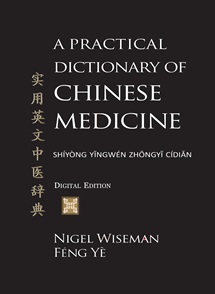
A Practical Dictionary of Chinese Medicine Digital Edition – eBook

By Nigel Wiseman & Feng Ye
Digital Edition

A note on our eBooks: Our eBooks use Social DRM, allowing you to read your eBook in the EPUB reader of your choice—no special software or activation required.

Each eBook is individually prepared for you. Your personalized download link will be sent in a separate email, apart from your order receipt, typically within 24–48 hours once payment has been successfully processed.

For device compatibility, recommended EPUB readers, and additional information, please visit our eBook Help page.

The Practical Dictionary of Chinese Medicine – Digital Edition

The Practical Dictionary of Chinese Medicine has long been regarded as the most comprehensive and authoritative reference available to practitioners, translators, and scholars of Chinese medicine. Now presented as a fully navigable digital edition, this landmark work becomes even more powerful, accessible, and indispensable for modern study and professional use.

Containing more than 10,000 carefully defined entries, the dictionary spans the full vocabulary of Chinese medicine—from the most fundamental clinical terms to the subtle distinctions found in advanced classical and modern texts. :contentReference[oaicite:0]{index=0} Each entry presents the English term alongside the original Chinese characters and Pīnyīn transliteration, providing precise definitions grounded in authoritative Chinese sources.

What distinguishes this work is not only its breadth, but its fidelity to the language and conceptual structure of Chinese medicine. Rather than simplifying or approximating meanings, the terminology reflects how Chinese physicians themselves think, write, and communicate within the tradition. This makes the dictionary uniquely valuable not only for clinical understanding, but also for translation, research, and the serious study of Chinese medical literature. :contentReference[oaicite:1]{index=1}

The digital edition transforms this already essential reference into a practical working tool. Fully searchable and extensively cross-linked, it allows readers to move instantly between related terms, patterns, medicinals, formulas, and acupoints—revealing the interconnected structure of Chinese medical knowledge in a way not possible in print.

Features include:

  • More than 10,000 entries covering diseases, symptoms, patterns, formulas, medicinals, and acupoints
  • Original Chinese characters with Pīnyīn transliteration and tone marks
  • Precise, source-based definitions reflecting traditional Chinese medical concepts
  • Western medical correspondences and WHO terminology where appropriate
  • Extensive cross-referencing linking related concepts throughout the text
  • Comprehensive indexing, including variant and less common terminology valuable for translators
  • Fully searchable digital format for rapid lookup and efficient study

Whether used in clinical practice, academic research, or translation work, the digital edition allows readers to locate and connect concepts instantly. It turns one of the field’s most respected reference works into a dynamic tool suited to the way modern practitioners and scholars work.

With its unmatched scope, precision, and conceptual clarity, The Practical Dictionary of Chinese Medicine remains the gold-standard reference in the field—now available in a format designed for speed, usability, and depth of study.

Chinese Medicine Foundations Set

ChiMedSetThumb

By Nigel Wiseman with Sabine Wilms
Trade Paperback Set, Includes 3 Books
SET ISBN 978-0-9908698-9-4

Chinese Medicine; Theories of Modern Practice Volume 1; 9780912111834, 564 pages
Chinese Medicine; Theories of Modern Practice Volume 2; Volume 2; 9780990869801, 732 pages
Chinese Medicine; The Ideas That Shaped It, ISBN 9780990869818, 324 Pages

This set includes 3 books: Chinese Medicine; Theories of Modern Practice, Volumes 1 & 2. Chinese Medicine; The Ideas That Shaped It.

 Chinese Medicine: Theories of Modern Practice describes the foundational doctrines, physiology, pathology, diagnostics, and therapeutics of Chinese medicine at the same breadth and depth as the basic-theory textbooks used in the People’s Republic of China. If you have ever wanted to know what a Chinese professor would say about a theory, pattern or clinical case this is the book for you. Built to enhance learning, it is ideal for self-study or to fill in the information missing from simplified texts.

     Chinese Medicine: Theories of Modern Practice comes as two practical volumes, well below the price of less thorough books. The authors are addressing people who want to understand Chinese medicine from the Chinese viewpoint. It is also for anyone who requires a practical professional reference at the level of detail required in the professional courses taught in the People’s Republic of China. This is enhanced by an included eBook version that is easily searched.

This text adopts modern pedagogical features to ensure holistic learning.

  • Step-by-step presentation of information, often lacking in textbooks, takes the student effortlessly from the known to the unknown. Concepts are systematically explained at their first mention.
  • A holistic approach is applied throughout. Chapters on physiology of the qi, blood, fluids, bowels, and viscera include previews of pathology (major signs, patterns, and diseases). Similarly, pattern identification chapters include previews of treatment. In this way, students can relate whatever they are studying at any given point to diagnosis and treatment. Furthermore, the pattern identification chapters include reviews of the physiology and pathomechanisms crucial to understanding a condition clinically.
  • Throughout the book important points are bulleted for ease of memorization. This helps students to more easily find the information they are looking for and eliminates needing to use marker pens to highlight important points in running text.
  • Chinese and pinyin equivalents are given for all major concepts. This not only useful for students who know, or who are learning, Chinese but also shows that in Chinese these are concepts with specific definitions that require attention and learning.
  • Substantial indexes provide useful references. Three indexes on signs, patterns, and diseases are included for review and reference. Three further indexes on acupoints, medicinals, and formulas will connect students to the complex realm of treatment.
  • Cross-referencing between chapters and sections enables students to find information quickly.
  • Covers basic theories to pattern identification at the depth and breadth of Chinese language texts.
  • The authors’ forthcoming work, Chinese Medicine: The Ideas that Shaped It, offers much of the same material at a more general level.
  • Printed as two volumes for convenient carrying and use. Fairly priced.
  • Information is presented in memorable bulleted lists, copious overviews and reviews, tables, additional information, and figures.
  • Appendices for signs, diseases, patterns, acupoints, medicinals, and formulas for easy review and reference.
  • Accompanying eBook is readable on computers or tablets.
  • Full eBook searchability with a clickable table of contents and cross-references, as well as a concept search facility.

Basic textbooks in Chinese are far more detailed than any current English-language textbook. Chinese Medicine: Theories of Modern Practice provides all the core information of Chinese language texts but avoids the Chinese tendency to overburden students with classical references. Many of the references mentioned in Chinese textbooks are not available in English translation and Chinese students are accustomed to a style of learning not common in the west.

Following the principles of knowledge acquisition, the text is presented in small, focused paragraphs and bullet lists that enable anyone to absorb information more efficiently. Chinese and Pīnyīn are included for the concepts discussed, not only to help students who are learning Chinese, but also to emphasize that the English terms for clinical details that are new to readers reflect the Chinese understanding. Frequent side displays provide concept explanations.

A vast amount of indexed material is included. This is usually not available in either Chinese or English-language texts. A detailed index is included to aid searchability. Notably, the accompanying eBook version provides unlimited searchability with a clickable table of contents, clickable cross-references, and a term search facility that is both more detailed and easier to use than a book index.

Overview: For students who are completely new to Chinese medicine, the Overview helps to form a general picture of the subject matter contained in the book. Readers with little knowledge of Chinese medicine will acquire background knowledge sufficient to orient themselves to the subject and to the text itself.

Qī, yīn-yáng and the five phases: This chapter provides much more detail about the core ideas and their origins than other English-language texts. This puts English-speaking students nearer par with their Chinese counterparts who bring their linguistic and cultural knowledge to their study of Chinese medicine.

Bowels and viscera: Much more detail than is available in commercial English language textbooks, especially concerning the specifics of concepts. Previews of the major symptoms, patterns, and diseases associated with each organ and substance reinforces these links. Recognizing relationships and the metaphors that describe them in Chinese, helps students remember them. By not summarizing clinical details and using English words that reflect the Chinese sense of ideas, English-speaking students more readily learn the links between concepts and treatments. Students are able to relate the physiology to the clinical context of pathology.

In Chinese this is complex, inter-woven information with many fine distinctions. To help students gain an equivalent depth of knowledge, the text preserves these relationships in English. Keeping Chinese metaphors in English translations makes memorization easier by emphasizing the links among ideas. By repeating the physiology and pathology along with each organ description, those concepts become easier to remember.

Qì, blood, essence, and fluids: As with the bowels and viscera, the text provides copious information about pathology. In the Chinse language pathology, diagnosis and therapy are described with consistent terms. By using English words with the same consistency students are saved the effort of re-learning vocabulary as they move through each stage of the discipline.

Channels and network vessels: Although not as detailed as advanced Chinese acupuncture books, Chinese Medicine: Theories of Modern Practice provides as much detail as Chinese-language basic-theory textbooks.

Constitution: The text devotes a whole chapter to seven different classification systems discussed in Chinese-language textbooks, but rarely discussed in English. Constitution is of importance in gauging a patient’s susceptibility to specific diseases. Knowing which of a number of diseases or patterns are most likely empowers clinicians to more effectively individualize a patient’s treatment.

Causes of disease: The book provides the same teachings as Chinese textbooks. In addition, information about the patterns and diseases that are associated with each specific cause enhances clinical performance.

Pathomechanisms: Pathomechanisms are important because skilled practitioners do not mechanically treat patterns according to presenting signs. Rather, they see illness as a dynamic process occurring through time, with a root in the past and the patient’s constitution, and a likely direction into the future. Understanding pathomechanisms helps practitioners focus treatment on the root causes and to treat illnesses before they arise.

Four examinations: Much more information is provided than in other English-language texts, both in terms of the range of symptoms covered and the subtly of the clinical variations described. Because of the strict linking of Chinese to English, learning the entire four examination symptom set is simultaneously learning the actions and indications of both medicinal substances and acupoints. By using English terms that work at the same level of coordination, learners are saved memorizing the same idea by several different names.

Pattern identification: The four chapters on pattern identification provide as much detail as Chinese-language textbooks. To help students absorb the information, there are introductions to each section devoted to a substance (qi, blood, fluids) and each bowel and viscus (heart, lung, spleen, etc.). These introductions are as detailed as each of the individual patterns. They provide not only a review of physiological features, but also copious information about the associated symptoms and diseases. Furthermore, for each pattern, we include brief indications of typical treatments, including acupoints and medicinal formulas.

Prevention and treatment: This chapter describes the principles of treatment that generally apply to different therapeutic modalities, as well as the specific treatment methods of acupuncture, medicinal therapy, and dietary therapy. The acumoxatherapy section describes equipment used, acupoint categories, and needling methods. The medicinal therapy section describes the basic categories of medicinals and rules for their combination.

     Indexes: Unlike most Chinese or English texts, the book includes a huge amount of indexed matter

  • Index 1: Signs lists the 320 or more symptoms from head to foot.
  • Index 2: Patterns summarizes the 119 disease patterns discussed in the book.
  • Index 3: Diseases describes the 130 diseases mentioned in the text.
  • Index 4: Acupoints lists all the acupoints of the channels and vessels and non-channel points (over 400 in total).
  • Index 5: Medicinals lists over 400 commonly used medicinals.
  • Index 6: Formulas lists over 400 commonly used formulas with their ingredients and use.

Chinese Medicine: The Ideas That Shaped It allows you to understand the Chinese view of their own medicine. It is intended for those who have, or who are now studying acupuncture and Chinese medicine, and who want to understand how a Chinese physician perceives the root concepts of Chinese medicine. It is also suitable for lay persons who want to understand more about Chinese medicine in its native culture.

The authors, Nigel Wiseman, and Sabine Wilms, were so intrigued by Chinese medicine that they mastered its language, studied with its scholars and clinicians, and tested their skills and conclusions at the most challenging levels of academic achievement. This book describes what people who work with Chinese medicine in its native language and culture know will benefit your learning.

Thus, Chinese Medicine: The Ideas That Shaped It provides an ideal preparation for studying Chinese Medicine: Theories of Modern Practice. These books were prepared in tandem. Students who require practical professional information at the level of detail required in the professional courses taught in the People Republic of China and Taiwan can begin their study firmly grounded in Chinese thought. As their studies advance, knowing what influences have affected the medicine, gives valuable insight into essential theories.

• Chinese Medicine: The Ideas That Shaped It gives a culturally accurate “sense of things:• You’ll grasp these ideas the same way Chinese students do.

• Chinese Medicine: The Ideas That Shaped It respects the historical realities of Chinese medicine. From its formative period through to its reception in the west today, and the effect of that reception in East Asia, the principles and practices of Chinese medicine evolved in direct response to the observation of clinical results.

• Chinese Medicine: The Ideas That Shaped It provides a practical and authentic foundation for the study of Chinese medicine. It also provides the information necessary to learn acumoxatherapy and Chinese medicine broader acceptance and encourage more and more people to avail themselves of its vast capabilities.

• Chinese Medicine: The Ideas That Shaped It, begins with the often-ignored topic of how Chinese medicine became what it is today. Where an idea comes from is not just an academic curiosity. It is an aid to understanding medical concepts by knowing the circumstances that brought them about.

About the Authors:

The authors, Nigel Wiseman and Sabine Wilms were so intrigued by Chinese medicine that they mastered its language, studied with its scholars and clinicians, and tested their skills and conclusions at the most challenging levels of academic achievement. This book describes Chinese medicine in its native language and culture. It is what you would learn as a student in a Chinese medical university.

The entire text is designed to provide a culturally accurate “sense of things.” Native Chinese students beginning their medical studies come equipped by their language, education and culture to grasp the complex relationships critical to the effective practice of Chinese medicine. Often those links are actually the Chinese characters. Westerners lack this preparation. Yet, when you learn the observations that are the roots of Chinese medicine, many relationships between concepts, pathologies and treatments will be grasped without rote memorization.

Because the authors have accepted the responsibility to see that the concepts expressed in English retain the detail and precise context of the original Chinese idea, readers are able to set aside pre-conceived notions based on western cultural experience. The chapters on qì, yīn-yáng, the five phases, as well as the bowels and viscera include rare discussions on the origin of these theories. This allows Westerners to understand the vision of the ancient founders and thus more fully grasp their clinical application. In a language of metaphors, learning their basis is critical to comprehension. The historic, linguistic and philosophical foundations of these ideas are explained in depth in the forthcoming text Chinese Medicine: The Ideas That Shaped It by the same authors.

Like the Chinese textbooks and curricula from which it derives, this book accords much greater emphasis to constitution and pathomechanisms than is yet available in English. In China these ideas are of crucial importance to acquiring powerful clinical skills in diagnosis and treatment. Only by understanding a condition from the viewpoint of the patient’s constitution, life circumstances, and illness development over time can disease patterns be reliably identified and progression to a more serious illness avoided. Pathomechanisms are difficult. enough that they are very rarely mentioned in English language basic theory texts. Chinese Medicine: Theories of Modern Practice gives learners access to explanatory concepts Chinese people use to educate themselves.

The chapter on the four examinations is a good example of this completeness. It discusses all of the symptoms covered in Chinese textbooks. English-language texts tend to blur, or simply ignore the critical nuances that skilled Chinese practitioners rely upon. Texts that revert to paraphrase, colloquial expressions or patients’ descriptions leave students unprepared for the complexities of clinical practice. It is undeniable that this information demands real study but, when mastered, reward students with more refined tools with which to meet clinical challenges.

A Chinese Medical Reference -eBook

ChiMedRef

Nigel Wiseman & Eric Brand
Digital Goods, eBook
9780912111179

Symptoms, Patterns, Diseases, Acupoints, Medicinals, and Formulas

A note on our eBooks: Our eBooks use Social DRM, allowing you to read your eBook in the EPUB reader of your choice—no special software or activation required.

Each eBook is individually prepared for you. Your personalized download link will be sent in a separate email, apart from your order receipt, typically within 24–48 hours once payment has been successfully processed.

For device compatibility, recommended EPUB readers, and additional information, please visit our eBook Help page.

The English-language literature of Chinese medicine lacks reference materials. Since the very first acupuncture programs decades ago, students have compiled lists of textbook items they need to memorize. Students today still make lists, a somewhat surprising fact in a digital age. A Chinese Medical Reference: Symptoms, Patterns, Diseases, Acupoints, Medicinals, and Formulas is a complete set of lists designed to save all the work. This comprehensive reference work is compiled to the highest professional standards from original Chinese sources, and its digital format ensures easy searchability and maximum affordability.

As the title suggests, A Chinese Medical Reference: Symptoms, Patterns, Diseases, Acupoints, Medicinals, and Formulas presents the key Chinese concepts thematically in six sections, with each concept forming an entry. It presents 320+ symptoms, 130+ patterns, 130+ diseases, 400+ acupoints, 570+ medicinals, and 260+ medicinal formulas. With a total of 1,800 entries, it covers a comprehensive range of concepts, including the most-tested and commonly used, plus all the most-searched items in a course of study.

Throughout, Chinese terms are given in simplified and complex characters, so that they can be found by anyone who knows Chinese. Pinyin is given in accented and unaccented form, so that users can search whether they know the tones or have a system capable of entering tone marks. General terms can be searched by English, acupoints by alphanumeric codes, and medicinals by English and Latin pharmacognostic names.

The material has been drawn from other works. Symptoms, patterns, and diseases come from Chinese Medicine: Theories of Modern Practice, while acupoints, medicinals, and formulas have been extracted from our databases. Those works have all been compiled from Chinese sources, ensuring that students receive information of the same scope and quality as taught in China’s professional medical colleges.

A major problem for students is terminological inconsistencies between English-language authors. One and same concept may be represented by one term in one author and by a different term in another. Even more confusing, one and same term may refer to different concepts depending on the author. A Chinese Medical Reference: Symptoms, Patterns, Diseases, Acupoints, Medicinals, and Formulas avoids this problem with rigorous consistency. Each concept is referred to by a single English term that closely mirrors the Chinese original. Wherever that concept appears, it is always referred to by the same name.

When a concept is referred to by a single term every time it is used, students can develop their understanding of the concept by seeing how it used in different contexts. The digital format, so much more practical than the indexes contained in paper books, allows readers to search through a whole text, find each context, thereby enhancing their understanding. Since the digital versions of other works by Wiseman and his colleagues all use the same terminology, searches can be performed over a wide range of literature, including:

  • Chinese Medicine: The Ideas that Shaped It
  • Chinese Medicine: Theories of Modern Practice
  • Comprehensive Chinese Materia Medica
  • Concise Chinese Materia Medica
  • Fundamentals of Chinese Acupuncture
  • Fundamentals of Chinese Medicine
  • Jīn Guì Yào Lüè
  • Practical Dictionary of Chinese Medicine
  • Shāng Hán Lùn

It is difficult to emphasize enough how digital information revolutionizes the learning process. Digital searches are far more efficient than look-ups from index entries. Instead of poring over isolated text, students can trace concepts throughout the text they are reading and beyond. Instead of making hand-written notes and indelible color marks on a paper copy, e-books give readers the ability to make editable bookmarks and highlights to personalize their information according to their changing needs. This reduces the need for passive memorization by rote and makes learning an active process of constant investigation.

Symptoms: The symptoms section starts with general conditions and then presents localized conditions from head to toe. This arrangement has the advantage of enhancing the traditional four examinations scheme, whereby certain symptoms of specific loci may appear in more than one of four places. Thus, all urinary symptoms are placed together, as are stool symptoms, even though they might normally be divided among the inspection, listening and smelling, and inquiry examinations in diagnostic textbooks. Each symptom is described in such as a way as to enable students to easily identify it and differentiate it from others. Indication of the patterns or diseases in which each symptom can appear further offers students avenues for further searches to develop their knowledge.

Patterns: The patterns section lists the patterns included in modern Chinese-language diagnostic textbooks. The information provided includes main names, alternate names, key signs, full description, related diseases, pathogenesis, analysis of signs, treatments, combined patterns, and further developments. The content of this section is drawn from Chinese Medicine: Theories of Modern Practice.

Diseases: The diseases section includes many conditions that, though scantily discussed in English language textbooks, are commonly seen in Chinese-language basic theory texts. All 130 commonly presented diseases are included.

Acupoints: The acupoints section includes all 365 channel points, as well a selection of commonly used non-channel points. The information provided for each acupoint includes location (as given in modern textbooks), classical location (as given in premodern literature), local anatomy, actions, indications, stimulus applied, and point categories

Medicinals: The medicinals section includes a broader range of agents than Western students are normally required to master. Items are arranged according to their actions, as in textbooks. The information provided for each item includes Chinese alternate names, properties (nature and flavor), actions and indications, dosage and method of administration, product quality, and production area. Note that the same information can be found in Comprehensive Chinese Materia Medica (Paradigm Publications, 2022), which contains over 6,000 medicinals in alphabetical order.

Formulas: The formulas section is arranged according to actions, as in textbooks. The information for each item includes ingredients, method of preparation, actions, indications, formula rationale (explaining what each ingredient does), and variations. Since individual ingredients can be found in the medicinals section, and the indications can be found in the symptoms, patterns, and diseases sections, students have a vast amount of information at their fingertips in one e-book.

Chinese-English Dictionary of Chinese Medical Terms -eBook

ChiEngDicChiMed

Nigel Wiseman
Digital Goods, Ebooks
9780912111674

A note on our eBooks: Our eBooks use Social DRM, allowing you to read your eBook in the EPUB reader of your choice—no special software or activation required.

Each eBook is individually prepared for you. Your personalized download link will be sent in a separate email, apart from your order receipt, typically within 24–48 hours once payment has been successfully processed.

For device compatibility, recommended EPUB readers, and additional information, please visit our eBook Help page.

Containing over 33,000 terms, the Chinese-English Dictionary of Chinese Medicine is the largest, fully searchable list of Chinese medical terms ever published. It is the only sufficiently comprehensive list of Chinese medical terms to be an ultimate go-to for any translator, student, or clinician. It contains a vast array of general terms, including the 5,000 or more of Practical Dictionary of Chinese Medicine (Paradigm Publications, 1997). It also contains the 1,500 standard and alternate acupoint names from Grasping the Wind (Paradigm Publications, 1989) and over 10,000 standard and alternate names of medicinals described in the Comprehensive Chinese Materia Medica (Paradigm Publications, 2023) derived from the Zhōng Yào Dà Cí Diǎn.

The present e-book version offers maximum searchability without the need of indexes. Chinese terms are given in simplified and complex characters, so that they can be found by anyone who knows Chinese. Pinyin is given in accented and unaccented form, so that users can search by it whether they know the tones or have a system capable of entering tone marks. General terms can be searched by English, acupoints by alphanumeric codes, and medicinals can be searched by English and Latin pharmacognostic names.

To make for the greatest utility without overly burdening the text, a standard set of graphical indicators are used throughout this and other related e-books. Square brackets ([ ]) indicate elements of terms that can be omitted (such as omissible elements of medicinal names) or notes to Chinese and English terms. A double asterisk (⁑) indicates polysemous medicinal names. A gray sidebar in the left-hand margin indicates a commonly used item.

This dictionary has a history of over thirty years of continual expansion and refinement. It began with a database created while writing Fundamentals of Chinese Medicine (Paradigm Publications, 1985). It was published in the form of Glossary of Chinese Medical Terms (Paradigm Publications in 1990). It was expanded and republished in the form of the English-Chinese, Chinese-English Dictionary of Chinese Medicine (Hunan Science and Technology Press, 1995). And in 2014, after further expansion, it was made available as the Online TCM Dictionary on Paradigm Publications’ website.

These decades of development and publication have given the terms here presented the benefit of other scholars’ contributions, as well as the refinements inspired by public critique. Chinese-English Dictionary of Chinese Medicine is an invaluable asset for translators and teachers engaged in compiling or presenting information from primary sources. As a bilingual term list, it has met the critical test of actual translations of the classical Chinese medical texts, the Shāng Hán Lùn (Paradigm Publications, 1999) and Jīn Guì Yào Lüè (Paradigm Publications, 2013) Chinese Medicine: Theories of Modern Practice (Paradigm Publications, 2022) shows this terminology to be up to the challenge of presenting the entire theoretical knowledge of professional Chinese medical education.

This e-book version offers translators suggestions for translation problems they come across in their work, without proprietary restrictions and at an extremely low cost. However, the notion that Chinese medicine does not possess a terminology that requires a corresponding terminology in English and other languages has not faded from the Western world. In view of this, the present work also includes an introduction explaining issues surrounding terminology and translation.

Chinese Medicine: Theories of Modern Practice eBook

ChiMedTheModPraE

By Nigel Wiseman with Sabine Wilms
Digital Goods, Ebooks
ISBN 978-0-912111-16-2
1296 pages

A note on our eBooks: Our eBooks use Social DRM, allowing you to read your eBook in the EPUB reader of your choice—no special software or activation required.

Each eBook is individually prepared for you. Your personalized download link will be sent in a separate email, apart from your order receipt, typically within 24–48 hours once payment has been successfully processed.

For device compatibility, recommended EPUB readers, and additional information, please visit our eBook Help page.

Chinese Medicine: Theories of Modern Practice describes the foundational doctrines, physiology, pathology, diagnostics, and therapeutics of Chinese medicine at the same breadth and depth as the basic-theory textbooks used in the People’s Republic of China. If you have ever wanted to know what a Chinese professor would say about a theory, pattern or clinical case this is the book for you. Built to enhance learning, it is ideal for self-study or to fill in the information missing from simplified texts.

Chinese Medicine: Theories of Modern Practice comes as two practical volumes, well below the price of less thorough books. The authors are addressing people who want to understand Chinese medicine from the Chinese viewpoint. It is also for anyone who requires a practical professional reference at the level of detail required in the professional courses taught in the People’s Republic of China. This is enhanced by an included eBook version that is easily searched.

This text adopts modern pedagogical features to ensure holistic learning.

  • Step-by-step presentation of information, often lacking in textbooks, takes the student effortlessly from the known to the unknown. Concepts are systematically explained at their first mention.
  • A holistic approach is applied throughout. Chapters on physiology of the qi, blood, fluids, bowels, and viscera include previews of pathology (major signs, patterns, and diseases). Similarly, pattern identification chapters include previews of treatment. In this way, students can relate whatever they are studying at any given point to diagnosis and treatment. Furthermore, the pattern identification chapters include reviews of the physiology and pathomechanisms crucial to understanding a condition clinically.
  • Throughout the book important points are bulleted for ease of memorization. This helps students to more easily find the information they are looking for and eliminates needing to use marker pens to highlight important points in running text.
  • Chinese and pinyin equivalents are given for all major concepts. This not only useful for students who know, or who are learning, Chinese but also shows that in Chinese these are concepts with specific definitions that require attention and learning.
  • Substantial indexes provide useful references. Three indexes on signs, patterns, and diseases are included for review and reference. Three further indexes on acupoints, medicinals, and formulas will connect students to the complex realm of treatment.
  • Cross-referencing between chapters and sections enables students to find information quickly.
  • Covers basic theories to pattern identification at the depth and breadth of Chinese language texts.
  • The authors’ forthcoming work, Chinese Medicine: The Ideas that Shaped It, offers much of the same material at a more general level.
  • Printed as two volumes for convenient carrying and use. Fairly priced.
  • Information is presented in memorable bulleted lists, copious overviews and reviews, tables, additional information, and figures.
  • Appendices for signs, diseases, patterns, acupoints, medicinals, and formulas for easy review and reference.
  • Accompanying eBook is readable on computers or tablets.
  • Full eBook searchability with a clickable table of contents and cross-references, as well as a concept search facility.
    Basic textbooks in Chinese are far more detailed than any current English-language textbook. Chinese Medicine: Theories of Modern Practice provides all the core information of Chinese language texts but avoids the Chinese tendency to overburden students with classical references. Many of the references mentioned in Chinese textbooks are not available in English translation and Chinese students are accustomed to a style of learning not common in the west.

Following the principles of knowledge acquisition, the text is presented in small, focused paragraphs and bullet lists that enable anyone to absorb information more efficiently. Chinese and Pīnyīn are included for the concepts discussed, not only to help students who are learning Chinese, but also to emphasize that the English terms for clinical details that are new to readers reflect the Chinese understanding. Frequent side displays provide concept explanations.

A vast amount of indexed material is included. This is usually not available in either Chinese or English-language texts. A detailed index is included to aid searchability. Notably, the accompanying eBook version provides unlimited searchability with a clickable table of contents, clickable cross-references, and a term search facility that is both more detailed and easier to use than a book index.

Overview: For students who are completely new to Chinese medicine, the Overview helps to form a general picture of the subject matter contained in the book. Readers with little knowledge of Chinese medicine will acquire background knowledge sufficient to orient themselves to the subject and to the text itself.

Qī, yīn-yáng and the five phases: This chapter provides much more detail about the core ideas and their origins than other English-language texts. This puts English-speaking students nearer par with their Chinese counterparts who bring their linguistic and cultural knowledge to their study of Chinese medicine.

Bowels and viscera: Much more detail than is available in commercial English language textbooks, especially concerning the specifics of concepts. Previews of the major symptoms, patterns, and diseases associated with each organ and substance reinforces these links. Recognizing relationships and the metaphors that describe them in Chinese, helps students remember them. By not summarizing clinical details and using English words that reflect the Chinese sense of ideas, English-speaking students more readily learn the links between concepts and treatments. Students are able to relate the physiology to the clinical context of pathology.

In Chinese this is complex, inter-woven information with many fine distinctions. To help students gain an equivalent depth of knowledge, the text preserves these relationships in English. Keeping Chinese metaphors in English translations makes memorization easier by emphasizing the links among ideas. By repeating the physiology and pathology along with each organ description, those concepts become easier to remember.

Qì, blood, essence, and fluids: As with the bowels and viscera, the text provides copious information about pathology. In the Chinse language pathology, diagnosis and therapy are described with consistent terms. By using English words with the same consistency students are saved the effort of re-learning vocabulary as they move through each stage of the discipline.

Channels and network vessels: Although not as detailed as advanced Chinese acupuncture books, Chinese Medicine: Theories of Modern Practice provides as much detail as Chinese-language basic-theory textbooks.

Constitution: The text devotes a whole chapter to seven different classification systems discussed in Chinese-language textbooks, but rarely discussed in English. Constitution is of importance in gauging a patient’s susceptibility to specific diseases. Knowing which of a number of diseases or patterns are most likely empowers clinicians to more effectively individualize a patient’s treatment.

Causes of disease: The book provides the same teachings as Chinese textbooks. In addition, information about the patterns and diseases that are associated with each specific cause enhances clinical performance.

Pathomechanisms: Pathomechanisms are important because skilled practitioners do not mechanically treat patterns according to presenting signs. Rather, they see illness as a dynamic process occurring through time, with a root in the past and the patient’s constitution, and a likely direction into the future. Understanding pathomechanisms helps practitioners focus treatment on the root causes and to treat illnesses before they arise.

Four examinations: Much more information is provided than in other English-language texts, both in terms of the range of symptoms covered and the subtly of the clinical variations described. Because of the strict linking of Chinese to English, learning the entire four examination symptom set is simultaneously learning the actions and indications of both medicinal substances and acupoints. By using English terms that work at the same level of coordination, learners are saved memorizing the same idea by several different names.

Pattern identification: The four chapters on pattern identification provide as much detail as Chinese-language textbooks. To help students absorb the information, there are introductions to each section devoted to a substance (qi, blood, fluids) and each bowel and viscus (heart, lung, spleen, etc.). These introductions are as detailed as each of the individual patterns. They provide not only a review of physiological features, but also copious information about the associated symptoms and diseases. Furthermore, for each pattern, we include brief indications of typical treatments, including acupoints and medicinal formulas.

Prevention and treatment: This chapter describes the principles of treatment that generally apply to different therapeutic modalities, as well as the specific treatment methods of acupuncture, medicinal therapy, and dietary therapy. The acumoxatherapy section describes equipment used, acupoint categories, and needling methods. The medicinal therapy section describes the basic categories of medicinals and rules for their combination.

Indexes: Unlike most Chinese or English texts, the book includes a huge amount of indexed matter

  • Index 1: Signs lists the 320 or more symptoms from head to foot.
  • Index 2: Patterns summarizes the 119 disease patterns discussed in the book.
  • Index 3: Diseases describes the 130 diseases mentioned in the text.
  • Index 4: Acupoints lists all the acupoints of the channels and vessels and non-channel points (over 400 in total).
  • Index 5: Medicinals lists over 400 commonly used medicinals.
  • Index 6: Formulas lists over 400 commonly used formulas with their ingredients and use.

About the Authors:

The authors, Nigel Wiseman and Sabine Wilms were so intrigued by Chinese medicine that they mastered its language, studied with its scholars and clinicians, and tested their skills and conclusions at the most challenging levels of academic achievement. This book describes Chinese medicine in its native language and culture. It is what you would learn as a student in a Chinese medical university.

The entire text is designed to provide a culturally accurate “sense of things.” Native Chinese students beginning their medical studies come equipped by their language, education and culture to grasp the complex relationships critical to the effective practice of Chinese medicine. Often those links are actually the Chinese characters. Westerners lack this preparation. Yet, when you learn the observations that are the roots of Chinese medicine, many relationships between concepts, pathologies and treatments will be grasped without rote memorization.

Because the authors have accepted the responsibility to see that the concepts expressed in English retain the detail and precise context of the original Chinese idea, readers are able to set aside pre-conceived notions based on western cultural experience. The chapters on qì, yīn-yáng, the five phases, as well as the bowels and viscera include rare discussions on the origin of these theories. This allows Westerners to understand the vision of the ancient founders and thus more fully grasp their clinical application. In a language of metaphors, learning their basis is critical to comprehension. The historic, linguistic and philosophical foundations of these ideas are explained in depth in the forthcoming text Chinese Medicine: The Ideas That Shaped It by the same authors.

Like the Chinese textbooks and curricula from which it derives, this book accords much greater emphasis to constitution and pathomechanisms than is yet available in English. In China these ideas are of crucial importance to acquiring powerful clinical skills in diagnosis and treatment. Only by understanding a condition from the viewpoint of the patient’s constitution, life circumstances, and illness development over time can disease patterns be reliably identified and progression to a more serious illness avoided. Pathomechanisms are difficult. enough that they are very rarely mentioned in English language basic theory texts. Chinese Medicine: Theories of Modern Practice gives learners access to explanatory concepts Chinese people use to educate themselves.

The chapter on the four examinations is a good example of this completeness. It discusses all of the symptoms covered in Chinese textbooks. English-language texts tend to blur, or simply ignore the critical nuances that skilled Chinese practitioners rely upon. Texts that revert to paraphrase, colloquial expressions or patients’ descriptions leave students unprepared for the complexities of clinical practice. It is undeniable that this information demands real study but, when mastered, reward students with more refined tools with which to meet clinical challenges.
Chinese Medicine: Theories of Modern Practice 2 Vol Set

ChiMedTheModPra

By Nigel Wiseman with Sabine Wilms
Trade Paperback 2 Volumes
Set ISBN 978-0-9908698-7-0
Volume 1; 978-0-912111-83-4, 564 pages
Volume 2; 978-0-9908698-0-1, 732 pages

The Most Complete English-Language Presentation of Chinese Medical Theory

Chinese Medicine: Theories of Modern Practice presents the foundational doctrines, physiology, pathology, diagnostics, and therapeutics of Chinese medicine at a level approaching the basic-theory textbooks used in Chinese medical universities. Designed for serious students and practitioners, it provides English-speaking readers with access to the conceptual framework of Chinese medicine as it is studied and taught in China.

Chinese Medicine: Theories of Modern Practice is written for readers who wish to understand Chinese medicine from the Chinese perspective. Rather than simplifying complex ideas, the text preserves the distinctions and terminology found in Chinese-language sources, allowing students to study the discipline with the same conceptual clarity available to their Chinese counterparts. Issued as two convenient volumes, it provides an authoritative reference at a remarkably accessible price. For Redwing Books direct retail customers, an accompanying eBook version adds powerful searchability and ease of use.

This text adopts modern pedagogical features designed to support systematic learning and long-term retention.

  • A clear, step-by-step presentation of information takes the student from fundamental concepts to clinical understanding. Concepts are carefully explained at their first appearance and reinforced throughout the text.
  • A holistic structure links physiology, pathology, diagnosis, and treatment. Chapters describing qi, blood, fluids, bowels, and viscera include previews of major signs, patterns, and diseases, while pattern identification chapters review the physiological and pathomechanistic foundations necessary for clinical understanding.
  • Important information is presented in concise paragraphs and bullet points that highlight key concepts and make the material easier to review and memorize.
  • Chinese characters and pinyin equivalents are provided for major concepts. This assists students studying Chinese and emphasizes the precise technical meanings underlying Chinese medical terminology.
  • Extensive indexing provides powerful reference tools. Separate indexes for signs, patterns, diseases, acupoints, medicinals, and formulas connect theoretical concepts with the clinical realm.
  • Cross-referencing throughout the text enables readers to move quickly between related discussions and deepen their understanding of complex topics.
  • The book covers the full range of basic theory—from fundamental doctrines through pattern identification—with a breadth and depth comparable to Chinese-language textbooks.
  • Printed as two practical volumes for convenient use in study and clinical reference.
  • Information is organized using tables, summaries, and explanatory displays that clarify relationships between concepts.
  • Appendices and indexes provide rapid access to clinical information for review and reference.
  • For Redwing Books direct retail buyers, an accompanying eBook provides full-text searchability, a clickable table of contents, and cross-references for easier study and navigation.
  • The digital edition includes full-text searchability, a clickable table of contents, and cross-references that allow readers to navigate the material with ease.

Basic theory textbooks in Chinese are far more detailed than most English-language introductions to Chinese medicine. Chinese Medicine: Theories of Modern Practice makes this level of detail accessible to English-speaking readers while avoiding the heavy reliance on classical quotations that often complicates Chinese textbooks.

Following principles of effective knowledge acquisition, the text is organized into focused paragraphs, summaries, and lists that allow readers to absorb complex material efficiently. Chinese characters and Pīnyīn are provided for key concepts not only to assist language learners but also to show how English terminology reflects the original Chinese ideas.

A vast amount of indexed material is included—far more than is typically available in either Chinese or English-language texts. The detailed indexes make the printed volumes powerful reference tools, while the accompanying eBook allows unlimited searching and rapid navigation through clickable cross-references and a comprehensive search function.

Overview and Fundamental Doctrines: The opening overview provides readers new to Chinese medicine with a clear orientation to the subject and prepares them to understand the conceptual structure of the discipline. The chapters on qì, yīn-yáng, and the five phases examine the core theoretical foundations of Chinese medicine in far greater detail than most English-language texts, explaining both the concepts themselves and their historical origins.

Bowels, Viscera, Substances, and Channels: Detailed discussions of the organ systems include physiological functions, associated patterns, and the relationships that link physiology with clinical presentation. The chapters on qì, blood, essence, and fluids explore the fundamental substances of Chinese medicine, explaining their physiological roles and pathological transformations in clinical disease. The channel system is likewise presented with a level of detail comparable to Chinese-language basic theory textbooks, connecting channel physiology with pathology and treatment.

Constitution, Causes of Disease, and Pathomechanisms: A full chapter examines several constitutional classification systems found in Chinese medical literature, an area rarely discussed in English-language texts. The discussion of etiological factors reflects the teachings of Chinese medical textbooks while relating specific causes to the patterns and diseases they produce. The chapter on pathomechanisms explains how illness develops and evolves over time, helping practitioners identify root causes and anticipate the progression of disease.

Diagnosis, Pattern Identification, and Treatment: The four examinations of inspection, listening and smelling, inquiry, and palpation are described with far greater nuance than in most English-language texts. Extensive chapters on pattern identification guide readers through the diagnostic frameworks used to interpret signs and symptoms and connect them to treatment strategies. The final chapter outlines the principles guiding acupuncture, medicinal therapy, and dietary therapy, along with general strategies for preventing illness.

Indexes: Unlike most Chinese or English texts, the book includes a remarkable amount of indexed material.

  • Index 1: Signs lists more than 320 symptoms from head to foot.
  • Index 2: Patterns summarizes the 119 disease patterns discussed in the book.
  • Index 3: Diseases describes the 130 diseases referenced in the text.
  • Index 4: Acupoints lists all channel and non-channel points (over 400 in total).
  • Index 5: Medicinals lists over 400 commonly used medicinal substances.
  • Index 6: Formulas lists more than 400 formulas with their ingredients and applications.

About the Authors:

Nigel Wiseman and Sabine Wilms are internationally respected scholars of Chinese medicine who have devoted decades to studying its language, history, and clinical literature. Nigel Wiseman is widely known for his pioneering work in Chinese medical terminology and translation. His publications include Fundamentals of Chinese Medicine, Fundamentals of Chinese Acupuncture, and the landmark reference work A Practical Dictionary of Chinese Medicine.

Through careful translation and rigorous scholarship, the authors have sought to preserve the precise meaning of Chinese medical concepts in English. Their approach allows readers to encounter Chinese medicine as it is understood within its own intellectual and cultural tradition. By faithfully reflecting the language and conceptual structure of Chinese medicine, Chinese Medicine: Theories of Modern Practice enables Western students and practitioners to develop a deeper and more accurate understanding of this sophisticated medical system.

Chinese Herbal Medicine Bundle

ChiHerMedBun

Fundamentals of Chinese Medicine
By Nigel Wiseman & Andrew Ellis
Trade Paperback Book
ISBN 9780911111117
532 pages

&

Chinese Herbal Medicine Materia Medica: Portable 3rd Edition
By Dan Bensky
Hardcover book
ISBN 9780939616824
1311 pages, 8.00 x 10.00″

&

Chinese Herbal Medicine: Formulas and Strategies
By Volker Scheid, Dan Bensky, Andrew Ellis & Randall Barolet
Hardcover book
ISBN 9780939616831
1072 pages, 8.00 x 10.00″

This book bundle is for the TCM Hub Strategic Herbology Program with Jason Ginsberg, DACM

Fundamentals of Chinese Medicine description:

English translations of traditional Chinese medical texts rarely have conformed to the standards required of a contribution to sinology. One exception has been the first edition of Fundamentals of Chinese Medicine, a ground-breaking translation of the Zhong Yi Ji Chu Xue which demonstrated that not only was it possible to meet scholarly expectations for the translations of TCM, but that the cooperation of living Chinese speaking clinicians could reveal nuances of practice. Beyond beginner’s manuals, it gives English-speaking students of TCM a chance to appreciate the qualitative details available to their Chinese-speaking colleagues. It offers readers the rare opportunity to understand Chinese medicine, not as it is perceived by a Western writer, but as it is perceived and taught in China, because Chinese descriptions of TCM that confound Western expectations have not been expunged from the textual translation.

This revised edition incorporates experience from utilization of the work as a coursebook for teaching, not only in the West but in China. Based on the suggestion and aid of Western teachers and translators, this new, popularly priced edition features a simplified but precise English terminology, thousands of source Chinese characters, and hundreds of clinical definitions never before available in English. Contents include yin and yang and the five phases; qi, blood, essence, and fluids; the channels; the organs; diseases and their causes. Pattern identification and treatment of eight-parameter, organ, qi-blood, pathogens, and exogenous heat conditions are discussed in detail, as are the principles and methods of treatment. Illustrative acumoxa therapy has been added for Western acupuncturists.

The revised edition includes explanations of terms and an entire materia medica and formulary sufficient to practice the treatments described by the text. As such it is not only a unique, absolutely-defined and referenced text, but a self-contained and inexpensive course of study. As a basic text produced to a multi-author, multi-publisher voluntary standard, the revised Fundamentals of Chinese Medicine is a bridge between scholars and clinicians in both the East and West.

Chinese Herbal Medicine Materia Medica: Portable 3rd Edition description:

The authors of the third edition of this standard textbook have rewritten the book from top to bottom, contributing a wealth of information and practical insight on over 530 of the most commonly used herbs and drawing from a wide range of sources both ancient and modern to provide considerable additional perspective and detail. At 1200 pages, the book is more than double the size of the previous edition.

As before, the herbs are grouped in chapters by function, with expanded summaries and tables that compare and contrast them. Each herb is identified by its pharmaceutical, botanical, and family names, together with its Chinese, Japanese, Korean, and English common names. Key characteristics of the herbs are given at the beginning of each entry, along with dosage, properties, channels entered, and relevant cautions and contraindications. This provides the reader with a quick overview of the essential information.

The actions and indications of the herb are then presented, and integrated with important combinations that illustrate its various functions, with references to appropriate formulas. This provides a more three-dimensional picture of how each herb is actually used in the clinic.

A section of commentary, new to this edition, offers additional perspective and places the herb in its clinical context through rich historical references drawn from the writings of both pre-modern and contemporary scholars and physicians. The mechanisms of action underlying important herbal combinations, and comparisons with similar herbs – also new to this edition – provide a deeper context for understanding how the herb can be used in the clinic with optimal effect.

Another innovation is a section devoted to nomenclature and preparation. This includes information on the commonly-used names for the herb and historical background. It also describes the most important methods of processing and preparing the herb, with advice on how and for which purpose each method should be used.

Safety is another important focus of the new edition, with an emphasis on proper herb identification. Issues surrounding standardized products, desirable qualities, variants, and adulterants – a continuing concern – have been thoroughly researched, and here they are clearly explained for each herb so that the practitioner can discern the correct herb with more confidence. There is also extensive information on herb toxicity, as well as chemical constituents.

The utility of this book is enhanced by its wide range of appendices. Among them are color photographs comparing the standard and adulterant forms of over twenty common herbs; tables identifying herbs that are indicated for specific pathologies of the five yin organs; and extensive cross references of the herbs by taxonomy, pinyin, pharmaceutical name, and other East Asian languages. A bibliography of source books provides information on over 175 books cited in the text, and an editors’ bibliography lists the dozens of books that were used in researching and writing this volume. There are also comprehensive indices of both herbs and formulas, as well as a general index. The text includes thousands of Chinese characters, and tone marks are provided for the pinyin to make identification of the terms more precise.

Chinese Herbal Medicine: Formulas and Strategies

The new 2nd edition is designed to serve as both a textbook for students and an authoritative reference for TCM practitioners. The introduction to the book traces the historical evolution of the formulas, and provides practical pointers for their preparation and use. Detailed timelines depict the key events, authors, and texts in the 2,000-year history of traditional Chinese herbal medicine, placing the contents of this book in historical context.

The text includes over 800 medicinal formulas drawn from both classical and modern sources, and more than twice the information in the first edition. For each of the 340-plus principal formulas there is a discussion of therapeutic actions and indications, an analysis of the functions and interactions of the ingredients, the method of preparation, and a list of modifications to customize the formula in the clinic. Over 460 variations and associated formulas offer additional options for the practitioner.

Formula commentaries have been considerably expanded. Here the intent is to deepen the reader’s understanding of a formula’s genealogy, present an overview of controversies regarding composition, usage, and other issues, describe the extension of a formula’s application to a wider range of disorders, and provide key clinical pointers to facilitate use of the formula in the modern clinic. A new Comparisons section has been added to help students and practitioners focus on the distinguishing characteristics of each formula by contrasting it with other formulas that are similar in terms of composition or indication. Tables at the end of each chapter reinforce these distinctions by comparing and contrasting formulas across a wider range.

Among the appendices are a pinyin-to-English cross reference to the formulas, a basic summary formulary correlated to symptoms and disorders, a full listing of all books cited in the text, and a bibliography of all modern sources used in the preparation of the book. A comprehensive index to the formulas, and a general index, round out the contents.

Chinese Grammar for Life -eBook

ChiGraLif-E

By Nigel Wiseman & Chao Chia-Lin
Digital Goods, eBook

A note on our eBooks: Our eBooks use Social DRM, allowing you to read your eBook in the EPUB reader of your choice—no special software or activation required.

Each eBook is individually prepared for you. Your personalized download link will be sent in a separate email, apart from your order receipt, typically within 24–48 hours once payment has been successfully processed.

For device compatibility, recommended EPUB readers, and additional information, please visit our eBook Help page.

Chinese Grammar for Life is a systematic grammar of Taiwan Mandarin, richly illustrated with examples from the real-life conversation. It provides an integrated picture of Chinese grammar that is somewhat lacking in the ad-hoc sentence-pattern approach adopted by many textbooks and by programs, while at the same time providing example sentences in Chinese with Pīnyīn transliteration and English translations to enable readers to communicate in the real world of 21st century Chinese life in Taiwan.

Chinese grammar in many ways is vastly simpler than that of any European language. It no no variations in word form, no complex conjugations, declensions or other inflections that must be painstakingly memorized before one can start to read texts or engage in conversation. It expresses grammatical relationships almost exclusively through syntax (word-order), which is mastered by studying sentence patterns and by gradual osmosis. Despite the apparent simplicity of Chinese, Western students often find its grammatical constructions quite alien and often fail to fully understand them through the often piecemeal presentation of basic patterns. Our approach is to provide a more integrated picture by relating patterns to the underlying features of the language from which its logic derives. We discuss principles rarely discussed in textbooks, such as the definiteness of subjects, double subjects, the varying nature of objects, and the formation of compounds between different functional elements of a sentence.

Most grammar books intended for the student of a foreign language present minimum vocabulary order to make the grammar more accessible to beginners. A disadvantage of this is that the grammar book loses its attraction to more advanced students. Grammar, in the widest sense, includes the formation of words. In Chinese, where the distinction between word, morpheme, and phrase is blurred, word formation requires greater attention than in Indo-European languages. For these reasons, we have made a wide and useful vocabulary that comprehensively embodies word formation patterns a feature of this text. In particular, we have included comprehensive lists of classifiers, separable VO compounds, and commonly used adverbials.

Unit 1, intended for any student who has mastered the construction of the Chinese script and some basic characters, firstly introduces the salient features of the language, such as Chinese as an isolating, subject-verb-object, and monosyllabic language, as well as many other characteristics that help students to understand the underlying logic of the language. It then follows with a brief overview of Chinese grammar according to word classes (parts of speech) and larger functional units (nominals, verbs, adjectives, adverbials, conjunctions) and grammatical constructions such as negative and interrogative sentences.

The remaining units (2–10) each focus on a particular part of speech or element of grammar and how it is integrated into sentences. We pay attention to the word-building patterns of the language, as well as the grammatical structures. We include discussions on the diachronic aspects of the language, which are particularly important in Chinese, on how Chinese is similar to and differs from English and other European languages, and on how Taiwan Mandarin differs from Pǔtōnghuà. We place great emphasis on the use of work-horse words such as 就 jiù, 才 cái, 於 yú, 如 rú, 給 gěi, which perform important grammatical functions.

Grammatical theory is exemplified through thousands of example sentences that richly reflect the patterns of everyday Chinese communication and cover numerous communicative situations. Students who prize practicality of expression over theoretical explanation will find the example sentences almost sufficient in themselves to gain mastery of Chinese grammar along with heaps of vocabulary that they are unlikely to get in the classroom.


About the Authors

Nigel Wiseman, born in the UK, studied Spanish and German at Heriot-Watt University in Edinburgh and subsequently worked as a French-English translator in German in Belgium while learning Chinese. In 1981, he moved to Taiwan, where he has lived ever since. He holds a doctorate in Complementary Health from the University of Exeter.

Nigel has taught English and subjects related to Chinese medicine at China Medical University and Chang Gung University in Taiwan.

Specializing in English translation of Chinese medical texts, Nigel has produced numerous titles in collaboration with other translators. He is widely known in the international community for his research on Chinese medical terminology. He has written several language books for people learning Chinese medical Chinese.

Chao Chia-Lin (趙家麟), a native of Taiwan, studied psychology at Fuxinggang College, and holds a Masters degree in military logistics. He is currently studying for a Master’s degree in translation at Fujen Catholic University, New Taipei City, and works as a professional translator.

The Tao of Healthy Eating: Dietary Wisdom According to Chinese Medicine

TaoHeaEat

By Bob Flaws
Trade paperback book
ISBN 9781891845659
154 pages

This book is a layperson’s guide to healthy eating through the wisdom of Chinese medicine. Chinese medicine is more than 2,000 years old, and Chinese dietary therapy is one of the wisest, most important aspects of this ancient healing art. In this book, you will learn the Chinese medical description of digestion and all the practical implications of this description for day to day diet. Find out what Chinese medicine has to say about: cooked vs. raw foods; vegetarianism; obesity; high cholesterol; food allergies; (and) candidiasis. Also included are the Chinese medical descriptions of vitamins, minerals, (and) amino acids. If you are confused about what to eat and why, let 100 generations of Chinese physicians guide you along the Tao of Healthy Eating.

NEW features include:

  • Chinese characters & pin yin throughout the text for important terms
  • Not one, but several healthy eating pyramids for different dietary styles
  • New discussions of the modern Western diet, trans-fats, corn syrup, pesticides, and chemical additives
  • Recipes for specific pattern discrimination
  • Concise history of Chinese dietary therapy

About the author:

Bob Flaws, Dipl. Ac. & C.H., is one of the most famous Western doctors of Traditional Chinese Medicine in the world today. An internationally known author and lecturer on Chinese medicine, Bob Flaws has been practicing and teaching Chinese medicine for more than 20 years. His other credits include writing, translating, and editing more than 75 books and scores of articles on all aspects of Chinese medicine, being a Governor & Fellow of the National Academy of Acupuncture & Oriental Medicine, a founder, past president, and Lifetime Fellow of the Acupuncture Association of Colorado, a Fellow of the Register of Chinese Herbal Medicine (UK), and a founder of the Council of Oriental Medical Publishers and the National Acupuncture & Oriental Medicine Alliance.

“This is one of my favorite books. I wrote it specifically to answer all the most frequently asked questions my patients ask me regarding diet. Improper diet is probably the leading cause of disease in patients seeking help from acupuncturists and professional practitioners of Chinese medicine in the West today. If the diet is not regulated for the individual, no amount of acupuncture and Chinese herbal medicine will get a complete and lasting treatment effect. Therefore, it is vitally important that patients seeking acupuncture and Chinese medical treatment understand both the importance of a good diet and how to select foods for their particular pattern of imbalance. This book can also be used by anyone interested in achieving a higher level of health through modifying their diet. It seems that every few months someone comes out with a new wonder diet that supposedly will cure everyone’s ills. Often these diets disappear in a matter of another few months. Chinese medicine is the oldest, continuously professionally practiced, literate, secular medicine in the world today, and its theories on a healthy diet have been honed and tested by more than 100 generations of highly trained and intelligent professional practitioners. In other words, Chinese dietary therapy has stood the test of time.” -Bob


Praise for The Tao of Healthy Eating

“At last – an easy-to-understand book on healthy Chinese dietary theory!”

-Leading Edge Review, p. 6


“This book explains the theory behind the traditional Chinese diet and how to apply 2,000 plus years of Eastern dietary wisdom to our modern Western eating habits.”

-New Age Retailer, Jan./Feb. 1992, p. 29: