Description
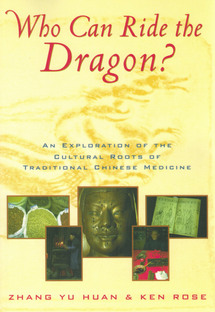
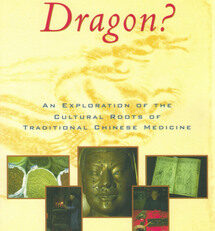
By Yu Huan Zhang & Ken Rose
Trade paperback book
ISBN 9780912111599
288 pages, 7.00 x 10.00″
Trade paperback book
ISBN 9780912111599
288 pages, 7.00 x 10.00″
Also available as an eBook:
View eBook Edition
View eBook Edition
An excellent book for the new student, this text provides insight into the depth and subtlety of traditional Chinese medicine by delving into the linguistic and cultural wellsprings of China’s venerable past. The authors’ knowledge, thoughtfulness, and dedication to their topic clearly radiate from every page. Steven Given, Dean of Clinical Education at Yo San University, writes: “Their interweaving of language, religion and culture results in a cogent and highly readable discourse that ties together the elements of culture and medicine. Zhang and Rose’s examination of the etymology and structure of the Chinese language is a major contribution to our understanding of how traditional Chinese medicine functions today.”
In her foreword to the book, Harriet Beinfield, co-author of Between Heaven and Earth: A Guide to Traditional Chinese Medicine, remarks: “[The authors] have performed a great service by clearing a path into the formidably dense thicket that constitutes Chinese medicine in the West. This text provides a window of inestimable value into a world of meaning that satisfies a yearning on the part of many who hunger to know the substrate from which Chinese medicine emerges.”
Publication Status: This is a legacy Paradigm Publications title that is currently out of print. While not scheduled for immediate reprint, reader interest and waitlist requests help inform future printing decisions.
Praise for Who Can Ride the Dragon
In reading this book I have not only gained a greater appreciation for TCM, but also a historical context in which to understand both the different theories and cultural influences that have contributed to the evolution of TCM as a culmination of philosophy, art, science and technique.
As practitioners many of us have clinical skills that we use in our everyday practice. This text explores the historical, linguistic and cultural influences that have all contributed to the development of TCM. Containing numerous illustrations, charts, black and white photographs, as well as Chinese calligraphy, it assists in one’s appreciation of TCM as both an art and a science.
Through an appreciation of Chinese language, folk beliefs, myths, customs, philosophical and religious influences, the TCM literary tradition and anecdotal historical references, the reader can gain a deeper understanding of the influential and evolutionary forces that contributed to TCM as we know it in the 21st century. Practitioners will gain valuable insight into the roots that shaped the depth and breadth of TCM, as well as the many branches that have emerged over time.
Undiluted by cultural, linguistic or historical separation, the authors portray the “state of the art” with factual and anecdotal narration illustrated with diagrams, photos, and Chinese calligraphy, further enhancing appreciation for the deep and varied roots of TCM.
This book is well organized and indexed, making it accessible for readers seeking specific topics. A glossary of familiar terms is included, presented in a way that deepens understanding, meaning, and appreciation.
As a practitioner of Oriental Medicine and a fluent Chinese speaker, the reviewer found the book deepened and reinforced learning and appreciation of Oriental Medicine. This book is highly worthwhile as an enjoyable read and will extend and broaden one’s understanding and practice of a medicine influenced by a variety of sources. A fun book to savor.
— David Bray, CMD, DAc, DiplCH (NCCAOM), The American Acupuncturist, Vol XXV, Winter 2001
— David Bray, CMD, DAc, DiplCH (NCCAOM), The American Acupuncturist, Vol XXV, Winter 2001
Reviews
There are no reviews yet.